Pick up a 10 kg dumbbell, hold it overhead with both hands, and try twelve slow crunches. Plenty of people who can hold a plank for three minutes fail that test, not because their abs are weak, but because they have never loaded the core with anything heavier than their own torso.
A free weight ab workout rests on one simple principle: the abdominals are skeletal muscle, and skeletal muscle adapts when resistance rises over time. That is the entire argument for adding a dumbbell or kettlebell to core training. A loaded set can climb in 2.5 kg steps, while a bodyweight crunch can only climb in repetitions until the set turns into an endurance drill.
Here is the short version. Three to four loaded movements, two to three sets each, eight to fifteen controlled reps, twenty minutes total, two or three times a week. The rest of this page explains how to run that session, how to progress it without irritating the lower back, and what to inspect on the equipment before you buy or resell it.
Why free weights change ab training
The rectus abdominis, the obliques and the deep stabilisers behave like any other muscle group: they adapt when the demand exceeds what they are used to. Bodyweight crunches are a fine starting point, but the resistance is fixed at the weight of your own trunk, so the only progression variables left are repetitions and leverage.
- Load is measurable. A 10 kg dumbbell is 10 kg today and 12.5 kg next month. Hands-behind-the-head versus arms-overhead crunches differ by a few kilos at best, and you cannot quantify the jump.
- Low reps stay possible. Once a bodyweight set runs past 25 to 30 reps, you are training endurance rather than strength. Loaded sets stay in the 8-15 rep range, where tension per rep is high enough to matter.
- Anti-movement work needs an external load. Suitcase holds, offset carries and standing chops teach the core to resist rotation and side bending. Without a weight in one hand, these movements have nothing to resist.
One caution before the sets begin: loaded spinal flexion is not a neutral exercise. Keep the load moderate, hold a controlled tempo, and end the set when the lower back starts rounding under the weight instead of flexing under control.
The 20-minute free weight ab workout
Run the exercises below as straight sets with 45 to 60 seconds of rest. Straight sets are easier to progress than a circuit and easier to teach in a group setting. The load ranges assume a trainee with at least six months of training behind them.
| Exercise | Load | Sets x Reps | Tempo | Main target |
|---|---|---|---|---|
| Overhead dumbbell crunch | 5-10 kg | 3 x 10-12 | 2 s down, 1 s up | Upper rectus abdominis |
| Dumbbell leg raise (weight between feet) | 2.5-5 kg | 3 x 10-12 | 3 s lowering | Lower rectus abdominis |
| Seated Russian twist | 5-12 kg | 3 x 12-16 | Controlled both ways | Obliques |
| Standing one-arm wood chop | 6-12 kg | 2 x 12 per side | 1 s out, 2 s back | Obliques, anti-rotation |
| Single-arm suitcase hold | 16-24 kg | 3 x 30-40 s per side | Static | Deep core, quadratus lumborum |
| Dumbbell side bend | 8-16 kg | 2 x 12 per side | 2 s eccentric | Lateral trunk |
With a short warm-up, working time lands between 18 and 22 minutes. If a session regularly runs past 30 minutes, you are resting too long or adding movements that were never part of the plan.
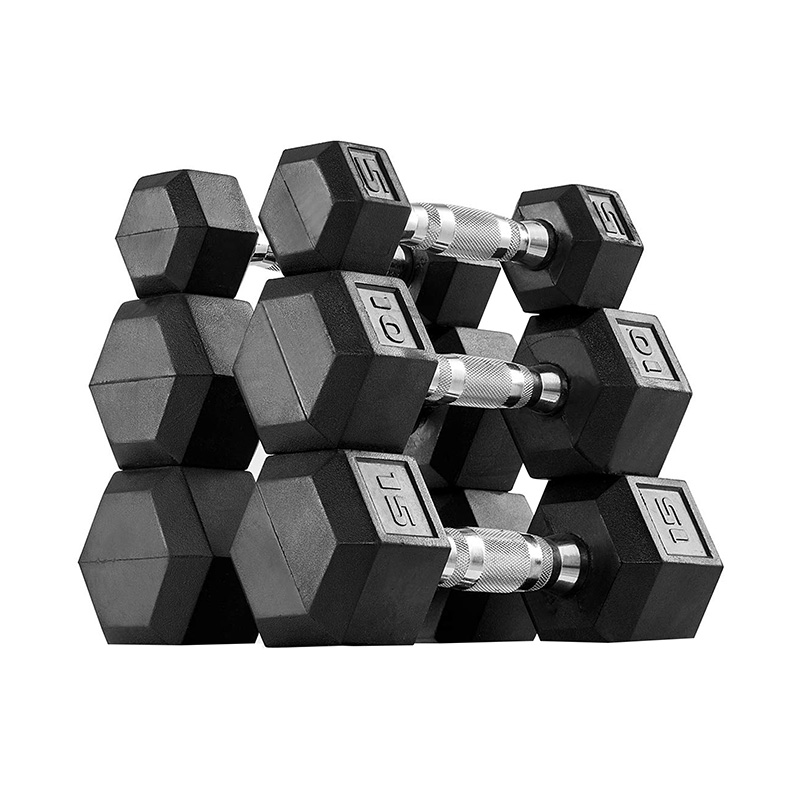 Black Multi-Sized Rubber Dumbbell Set by MenciroCustomizable rubber-coated dumbbells with clear weight IDs and hex shape for stable stacking, useful for strength and core sessions that stay within 18–22 minutes.View Product →
Four form cues that keep the work in the abs
Overhead crunch: ribs toward pelvis, not chin to chest
Lock the arms straight, keep the elbows close together, and think about shortening the distance between the ribcage and the pelvis. The shoulder blades should leave the floor by roughly 10 cm, not a full sit-up. A sore neck the next day means the head drove the movement.
Russian twist: rotate the ribcage, not just the arms
Keep the heels down, the chest tall, and turn from the middle of the torso. A twist that only swings the dumbbell side to side loads the shoulders and leaves the obliques out of the set. Slower is heavier here.
Suitcase hold: stay tall and refuse the lean
Stand with one dumbbell or kettlebell in one hand, shoulders level, and resist the pull toward the loaded side for 30 to 40 seconds. This is the safest loaded core movement on the list and the one that carries over most directly to lifting and carrying in daily life.
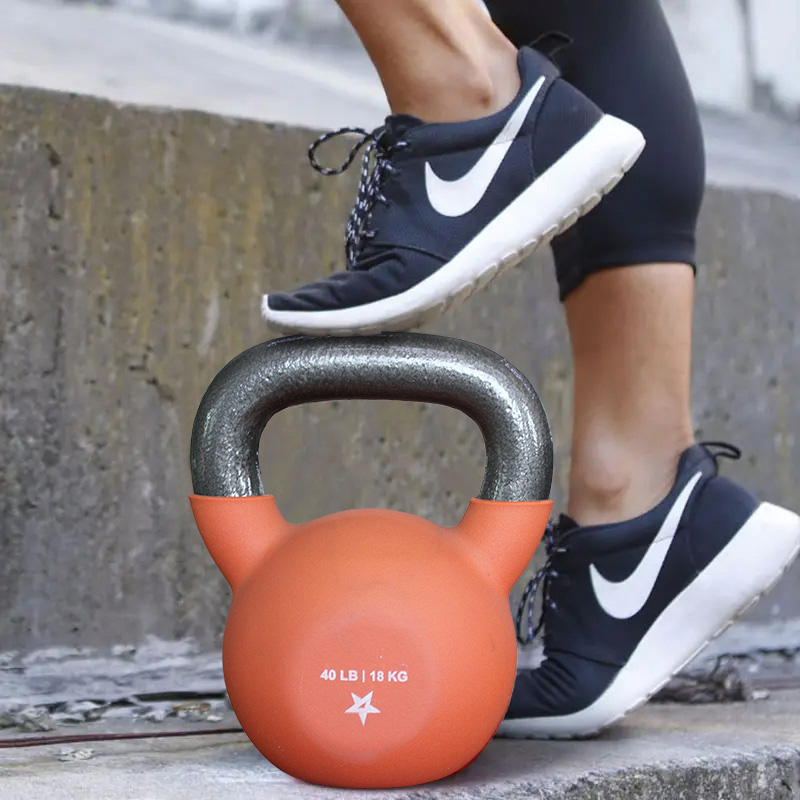 Coated Conditioning Training Kettlebells by DingfengCast iron kettlebells with dual coating and calibrated weights, suited to suitcase holds, swings, and core work where shoulder-level control matters.View Product →
Weighted leg raise: brace before the legs come down
Tilt the pelvis back slightly, squeeze the dumbbell between the feet, and lower only as far as you can keep the lower back flat on the floor. The moment the lumbar spine lifts, the hip flexors take over the work.
How to progress the workout over six weeks
Progression in loaded ab work follows a fixed order: load first, reps second, volume last. Apply it like this.
- Weeks 1-2: fix the tempo at two seconds per rep with a light dumbbell. Change nothing else.
- Weeks 3-4: add 2.5 kg per dumbbell or two reps per set, never both in the same week.
- Weeks 5-6: add a fourth set on the two hardest exercises, or cut rest to 30 seconds.
- Week 7: halve the volume, keep the load, and let the tissue recover.
Two sessions a week is enough for most people and three is the ceiling; leave at least 48 hours between them. If you can finish 18 clean reps of an exercise with the same load, that dumbbell is too light.
What to check on the equipment
For a home gym this list is short. For a distributor sourcing ab training products, it decides return rates.
- Flat-sided heads. Round dumbbells roll across the floor during floor work and between sets. Hex or otherwise flat-sided heads stay where you put them.
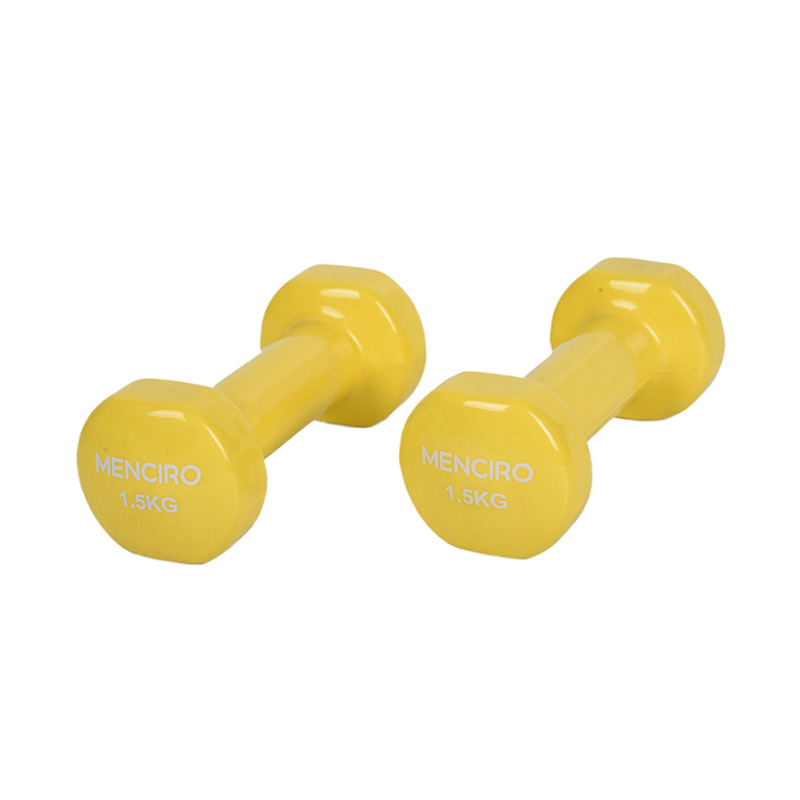
- Coating adhesion. Vinyl or neoprene over cast iron protects flooring and cuts noise, but peeling at the seam is the most common complaint after months of floor contact. Ask for a sample and flex the coating at the seam.
- Weight tolerance. Commercial-grade dumbbells are normally held within plus or minus 3 percent of the marked weight. Ask the factory for its tolerance figure and confirm it with a scale on the sample.
- Handle diameter. 32-34 mm suits most hands. Thicker handles are a marketing feature for ab work, not a benefit.
- Roller build. A dual-wheel roller with a 15-18 cm wheel and a steel axle is stable enough for beginners, and auto-rebound models with a spring return sell more easily into home-use channels.
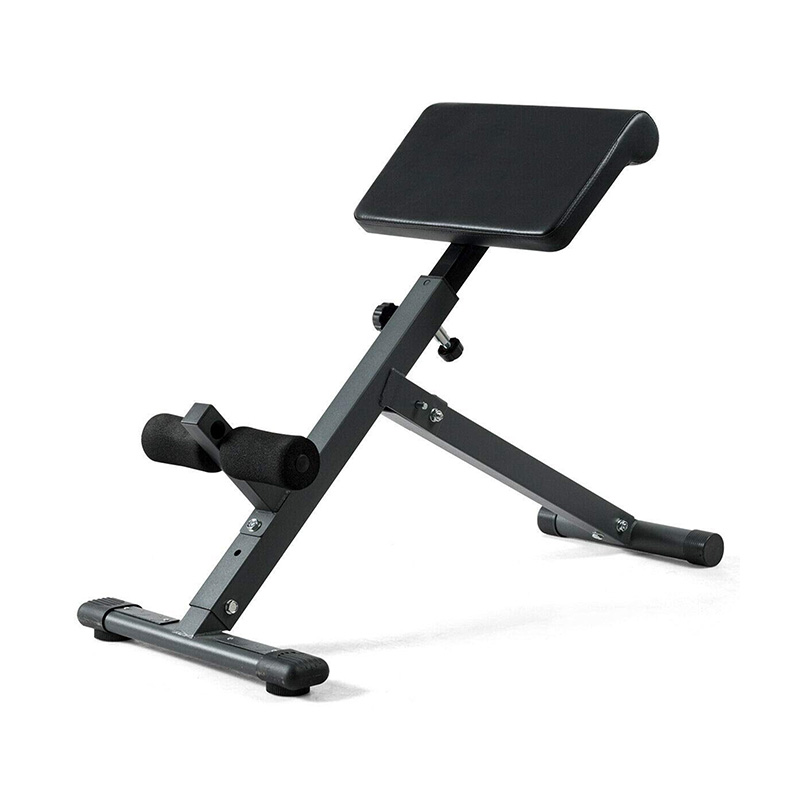
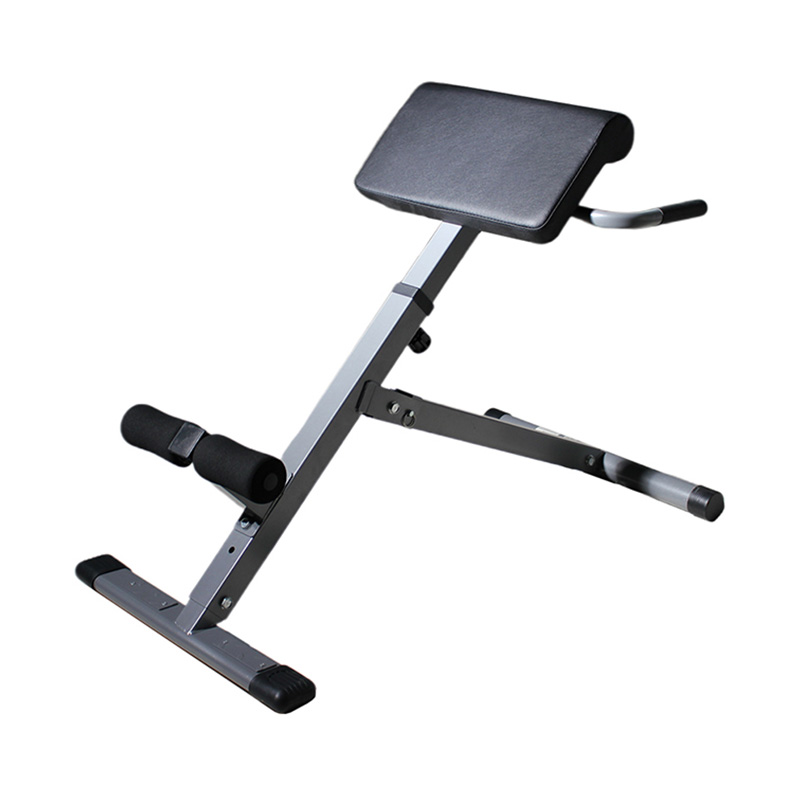
A roller is not a free weight, but it trains the same anti-extension quality as a weighted leg raise and pairs well with the session above; an ab roller with a dual-wheel design is the version most buyers ask for. Suppliers who also sell back-extension benches should check padding density and hinge quality before committing to a container — our guide on roman chair selection walks through those points in detail.
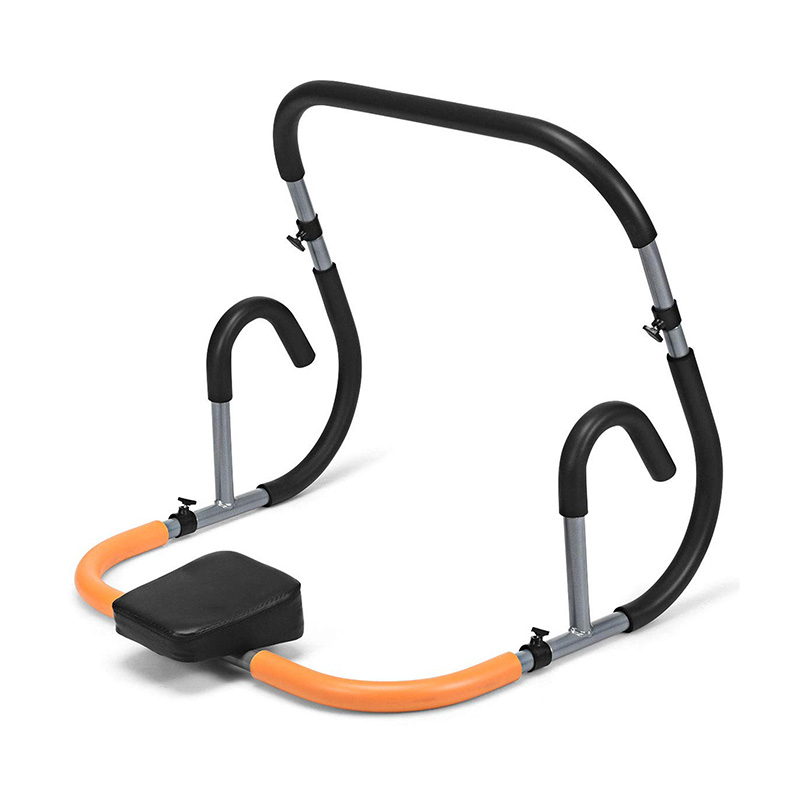 Auto Rebound Exercise Ab Roller by MenciroSteel ab roller with automatic rebound and anti-slip construction, offering adjustable difficulty for core training that complements anti-extension and standing core work.View Product →
Safety notes worth repeating
Loaded spinal flexion is a legitimate training method, but it is not for everyone. Skip the overhead crunch and the weighted leg raise if you have a diagnosed disc problem, current lower back pain, or recent abdominal surgery, and replace them with the suitcase hold and the standing chop.
Stop the set immediately if you feel a sharp pinch in the lower back, if the neck takes over, or if you cannot hold the tempo. Soreness 24 to 48 hours later is normal; pain during the movement is not.
Free weight ab training comes down to a small, repeatable set of rules: keep the load in the 5-20 kg range, hold a two-second tempo, progress in 2.5 kg steps every two weeks, and leave 48 hours between sessions. Six movements will do the job; twenty will not do it better.
If you are buying or reselling the equipment, the specification matters more than the colour. Flat-sided dumbbell heads, a coating that survives floor contact, a stated weight tolerance and a stable roller axle are the four details that decide whether the product comes back as a return. They are also the easiest things to verify on a sample before the order is placed.